Rideshare and Delivery Pay: The Real Hourly Math After Every Cost
Marcus thought he cleared $1,400 a week driving. After gas, repairs and tax it was $720, plus the car's lost value.
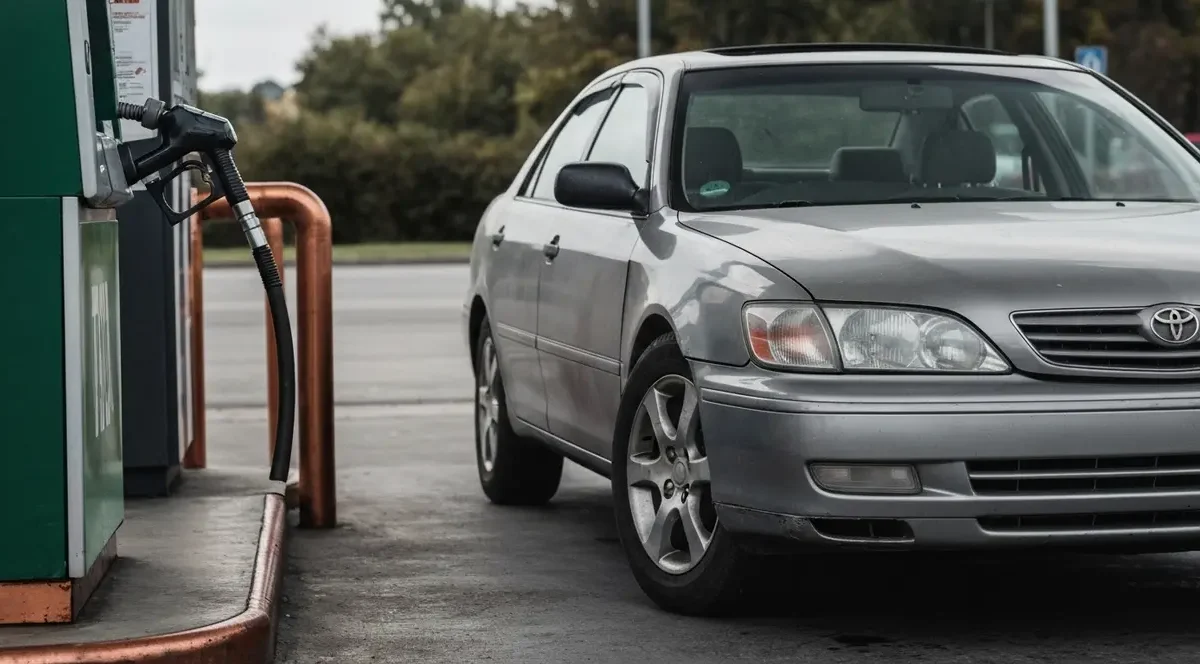
Marcus drove for Uber and DoorDash six nights a week for fourteen months. He thought he was clearing $1,400 a week. When his accountant pulled the numbers in April, his actual take-home, after gas, repairs, and self-employment tax, was closer to $720. He’d also put 47,000 miles on a four-year-old Camry that lost an estimated $9,000 in resale value over those same fourteen months. He hadn’t been earning. He’d been converting his car into cash at a discount.
This is the part of rideshare and delivery work that nobody on a recruiting flyer mentions. The gross hourly rate that Uber, Lyft, and DoorDash advertise is real. So is the gap between that number and what actually lands in your checking account after the IRS, the gas station, and your transmission take their cut. If you’re considering driving, already driving, or trying to figure out whether to keep driving, set aside 10 minutes to read this. The math changes the decision.
What the platforms pay vs what you keep
According to 2025 Gridwise data tracking over 500,000 drivers, Uber drivers earn a median gross of $21.18 per hour, Lyft drivers $19.48 per hour, and DoorDash drivers $11.63 per hour (including base pay, tips, peak pay, and promotions). Those numbers are honest as far as gross goes. They just don’t account for the four big drains that hit before money is yours to spend.
Here’s where the gross number leaks before it becomes net:
• Self-employment tax of 15.3% on net earnings (12.4% Social Security up to the $176,100 wage base, plus 2.9% Medicare with no cap).
• Federal and state income tax on top of that, typically another 10-22% depending on bracket and state.
• Fuel running roughly $0.10-$0.15 per mile in most US markets at 2026 gas prices.
• Vehicle depreciation, maintenance, and repairs that the IRS values at 35 cents per mile in 2026 (the depreciation component of the standard mileage rate per IRS Notice 2026-10).
Stack those together and most Uber drivers net approximately $15-$18 per hour after expenses, per 2025 Gridwise data. DoorDash drivers net roughly $12-$18 depending on market density and tip culture. Lyft sits in the middle.
Notice what that means. The $21/hour Uber number you see in the recruiting ad is closer to a $16 number once reality hits. That’s still real money. But it’s a different decision than the one most new drivers think they’re making.
The IRS mileage deduction is the only thing that makes this work
Here’s something nobody teaches you at the platform onboarding: your single biggest tax-saving lever is the IRS standard mileage deduction. For 2026, that rate is 72.5 cents per mile for business use, up 2.5 cents from 70 cents in 2025 (IRS Notice 2026-10, announced December 29, 2025). Every business mile you drive while logged in and accepting rides is deductible at that rate.
Grab a pen, let’s do the math together. A driver logging 20,000 business miles in 2026 deducts $14,500 from their taxable self-employment income. At a combined 22% federal income tax plus 15.3% self-employment tax marginal rate, that deduction is worth roughly $4,500-$5,000 in actual tax saved. Skip the mileage log and you pay that money to the IRS for no reason.
The catch: you must track miles contemporaneously. The IRS will not accept a guess in April. They want a date, a starting odometer, an ending odometer, and a business purpose for every trip. Apps like MileIQ, Stride, or Gridwise track automatically through GPS. Drivers who track religiously typically deduct 20-30% more miles than drivers who try to reconstruct logs from memory. That’s thousands in real refund money.
Marcus’s full case study, decision by decision
Back to Marcus. He’s 34, lives in a mid-sized Midwest market, drove a 2021 Toyota Camry with 38,000 miles on it when he started. Full-time day job paying $58,000. He started driving evenings and weekends to “knock out the credit card debt.” Here’s how the year actually played out, line by line.
Gross earnings across Uber and DoorDash: $54,800 over 14 months. Miles driven for the platforms: 47,000. Gas, at his average $0.13 per mile: $6,110. Maintenance and repairs (two oil changes a quarter, new tires at month 10, brake job at month 13): $2,840. Phone plan upgrade and dashcam: $480. Net before taxes: roughly $45,370.
Then the tax bill. Self-employment tax on net SE income: roughly $6,400. Federal income tax at his bracket: another $4,100. He hadn’t paid quarterly estimates. So in April he owed close to $10,500 he didn’t have set aside. After tax, his actual take-home over 14 months was around $34,800, or about $43 per actual driving hour averaged across his 810 logged hours. Not bad on paper.
But here’s the part Marcus missed. I’ve analyzed thousands of bank statements. Clear pattern: drivers who don’t account for vehicle depreciation think they’re earning until the car needs replacing. The Camry he started with at a $19,000 trade-in value was worth roughly $10,000 by month 14. That $9,000 hit isn’t on any platform statement. It’s the silent cost of driving 47,000 commercial miles in a personal vehicle. Real net, after depreciation: closer to $25,800, or about $32 per hour. Still positive. Just nowhere near the $43 he thought.
Gig income is cash, not wealth
Here’s the part nobody wants to tell you: rideshare and delivery work is one of the fastest ways to generate immediate cash flow available to an adult with a car and a license. It’s also one of the worst long-term wealth-building strategies. The reason isn’t the hourly rate. It’s the structure.
You get no employer 401(k) match. No paid time off. No health insurance subsidy. No life insurance. No disability coverage. No paid training. No vesting in anything. Every hour you drive, you’re trading time for a flat-rate cash payout with zero compounding benefit attached. Compare that to a W-2 job where a 4% employer 401(k) match on a $60,000 salary is $2,400 of free money per year, plus the tax-deferred compound growth on your own contribution.
That doesn’t make gig work bad. It makes it situational. The drivers who win treat it like what it is: a short-term cash generator for a specific goal. Pay off a credit card. Build a six-month emergency fund. Save a down payment. Bridge a job transition. Set the goal, hit it, get out. The drivers who lose treat it like a career and discover at year five that they’ve put 200,000 miles on three cars and have no retirement account to show for it.
The smarter approach if you’re going to drive anyway
If the math still works for your situation, here’s how to drive in a way that actually builds something. First, treat it like a business from day one. Open a separate checking account just for gig deposits and gig expenses. Every payment goes in, every gas fill-up and repair comes out. At year-end your tax prep takes 30 minutes instead of three weekends.
Second, set aside 25-30% of every payment the moment it hits your account. Financial advisors and CPAs commonly recommend this exact range to cover federal and state tax obligations. Most drivers who get crushed in April skipped this step. A high-yield savings account paying 4%+ APY (Annual Percentage Yield) earns you a few extra hundred dollars on that tax-reserve cash while it sits.
Third, learn the deductions beyond mileage. Starting in tax year 2025 (returns filed in 2026), rideshare and delivery drivers can deduct qualified tips up to $25,000 from federal taxable income under new law. The Section 199A pass-through deduction can shave another 20% off qualified business income, subject to thresholds ($201,750 single, $403,500 joint in 2026). Half of your self-employment tax is deductible on Schedule 1. Phone, hot bags, dashcam, car washes, parking fees all add up. A competent gig-economy tax preparer costs $300-500 and usually saves multiples of that.
Fourth, drive the right hours in the right car. Friday and Saturday nights between 9pm and 2am in any decent-sized US market pay 40-60% more per hour than Tuesday afternoons. A high-MPG used car with cheap parts (Prius, Corolla, Civic) crushes a comfortable SUV on net per mile. The drivers grossing $30+ per hour aren’t working more. They’re working smart hours in cheap cars.
Pulling the trigger without overthinking
The drivers who profit from rideshare and delivery aren’t the ones who drive the most hours. They’re the ones who treat the car as inventory and the route as a depreciating asset. Once you see it that way, the hourly question gets easier to answer honestly: would you pay yourself $15 net to put 30 miles of wear on a $25,000 machine? Sometimes yes. Sometimes no. But it’s the right question.
Three profiles, three plays:
• Paying off high-interest debt, short timeline: drive aggressively for 6-12 months with a written debt-payoff target. Track every mile. Quit the day the balance hits zero.
• Supplementing a stable W-2 income: cap driving at 10-15 hours/week on peak nights only. Funnel 100% of net into a Roth IRA or high-yield savings until you hit the goal.
• Considering it as primary income: reconsider. The lack of benefits, the vehicle wear, and the absence of any compounding return makes this structurally weaker than nearly any W-2 alternative at a similar gross.
I’m telling you this because I’ve seen it happen: the most common way drivers lose money on this isn’t crashing or getting deactivated. It’s two simpler traps. First, not setting tax money aside, which turns April into a financial emergency. Set up an automatic 28% transfer to a separate account the moment payments hit. Second, ignoring depreciation, which turns a fine year into a forced car purchase you didn’t plan for. Look up your current car’s Kelley Blue Book value today and recheck it every six months while you drive. The one mistake that ruins this is treating it like a job when it’s actually a small business that requires bookkeeping.
This week, do three things in under an hour: install a mileage tracking app (MileIQ or Stride both have free tiers), open a separate no-fee checking account for gig deposits, and pull your last 90 days of platform earnings to calculate your actual per-mile gross. Then verify the 2026 mileage rate at the IRS and check your state’s quarterly estimated tax requirements through resources like the Consumer Financial Protection Bureau. The drivers who do this in week one keep thousands more than the ones who do it in April.